
Login/Register
Countdown to GAD Asia in Hong Kong
Kevin Rozario
October 8, 2025

Spectacular: Hong Kong's skyline.
© Florian Wehde / Unsplash
The highly anticipated return of the GAD (Global Airport Development) Asia conference in Hong Kong is less than a month away. Taking place on November 4, as previously reported, the event will be co-located with Super Terminal Expo (November 4-6).
The relaunch of GAD Asia brings together a high-level speaker line-up, including, among others, Athanasios Titonis, CEO of Aboitiz Operating Airports, a big player in the Philippines; Berc Geris, Advisory Board Member and Senior Advisor to the CEO at Cranmore Partners and former DCEO and CFO at Tav Airports; Andrew Ford, the Founder of commercial strategies advisory firm Paccaya Resources; and Shobhit Agarwal, Vice President – Financial Controlling, Strategy & Business Development at fast-expanding Bangalore International Airport.
In addition, our own Modalis Infrastructure Partners (MIP) President, Curtis Grad, and the advisory firm’s Head of airportIR and Industry Research, Khair Mirza, will be present, as moderator and speaker, respectively. Conference attendees will include industry leaders, financial and strategic investors, public and private airport operators, regulators, and key stakeholders who will explore the future of airport development and investment across Asia.
In a recent report, ACI World forecast that Asia-Pacific passengers would reach 3.6 billion this year, up 5.6% YoY. This is significantly better than the forecast global average of 3.7%. Demand in the region has changed, and is currently driven by Southern and Southeast Asia, while East Asia’s outlook remained “cautious.”
GAD Asia’s welcome reception will take place on the evening of November 3 from 6.30pm at Hong Kong’s SkyCity Marriott Hotel next to Hong Kong International Airport, followed by a full conference program at AsiaWorld-Expo the next day. The Expo is a short walk from the hotel.
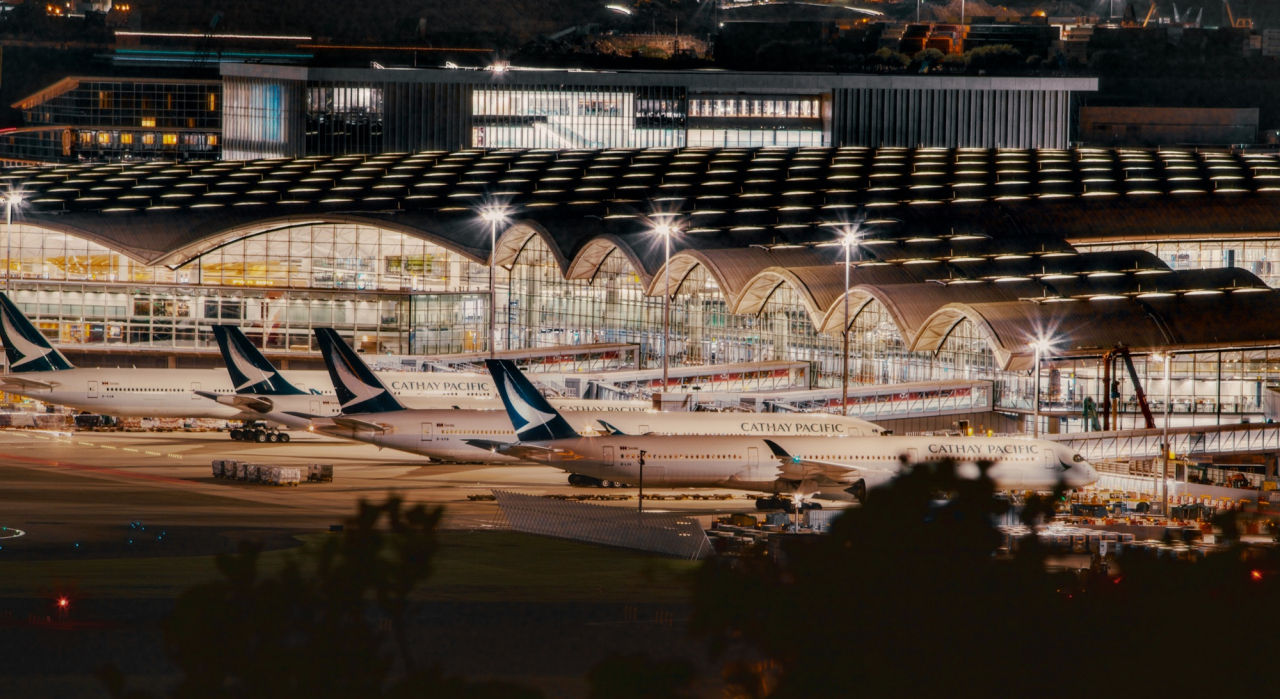
GAD Asia will take place close to HKG Airport, pictured above.
© Sugarman Joe / Unsplash
A Strong Conference Agenda
Sessions start from 9am after registration, and finish at 5pm. Among the presentations will be a strategic outlook for airports in Asia-Pacific; future-proofing airports by aligning investment with sustainability objectives, as well as the quality of service offered to passengers, airlines and local communities; and a profile of CASIL (China Airport Synergy Investment Limited) the Hong Kong-based investment platform that is focused on acquiring, operating, and investing in airports and aviation-related assets globally. CASIL is owned by CALC (China Aircraft Leasing Group Holdings Limited).
A C-Suite roundtable will analyze post-pandemic recovery and what lies ahead for privatized airport operations, including the impacts of changing demographic profiles around the globe. It will also look at the role of airports in meeting Sustainable Development Goals (SDGs).
There will also be some key panel discussions. In ‘Risk and Rewards: Return Expectations for Investors,’ speakers will examine how Asian governments are increasingly turning to the private sector to finance, modernize, and operate airports, and how that will translate into return on equity (ROE).
The panel will delve into investor expectations for returns in the context of regional risk profiles, regulatory environments, and growth potential. Issues covered will include how risk-adjusted returns compare with global benchmarks and what ROE levels are considered acceptable by investors.
Another panel, ‘Shaping the Commercial Heart of Airports,’ will look at how non-aeronautical revenue has become important to ROE. According to ACI, this income stream represents around 40% of an airport’s total revenue—and in Asia and the Middle East, that share is often even higher, driven by retail, food and beverage, and duty-free shopping.
The panel will discuss the value of designing these commercial spaces from the start of new infrastructure planning so that well-placed retail, dining, and service areas can generate substantial financial returns. It will also explore how well-planned commercial zones can transform airports into thriving hubs in terms of both travel and business.
For full details of GAD Asia, please click here.