
Login/Register
Copenhagen Airport is Outperforming Europe’s Major Hubs. Why?
Dion Zumbrink
October 23, 2026
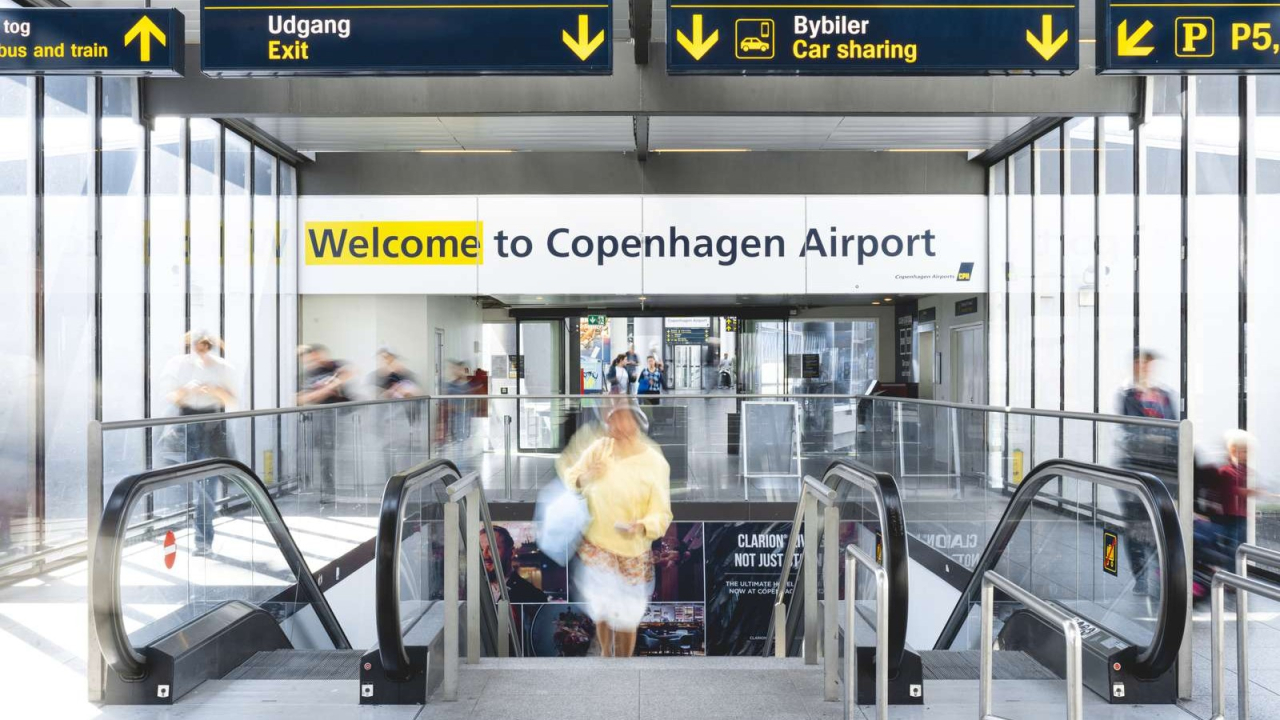
CPH has become a bigger hub in SAS's network.
© Copenhagen Airports A/S
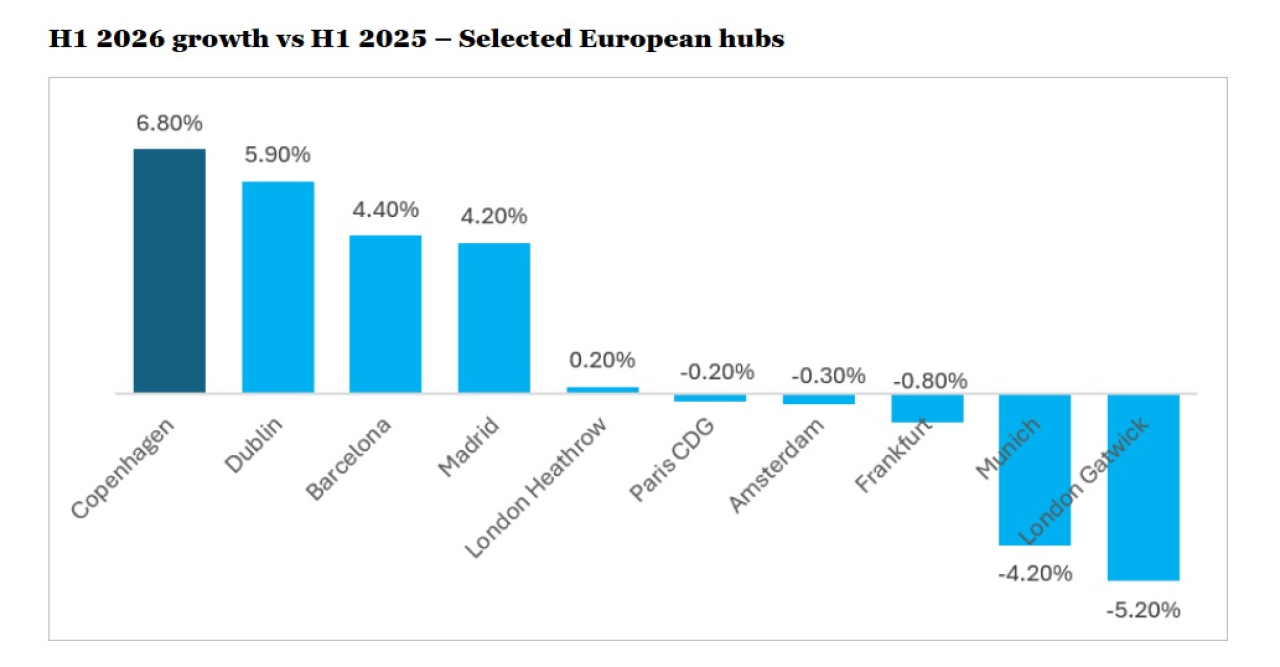
European airport traffic growth has become increasingly uneven, and Copenhagen Airport (CPH) is currently a clear growth standout. In the first half of 2026, the Danish hub recorded passenger growth of 6.8% according to ACI Europe, ahead of other major European hubs.
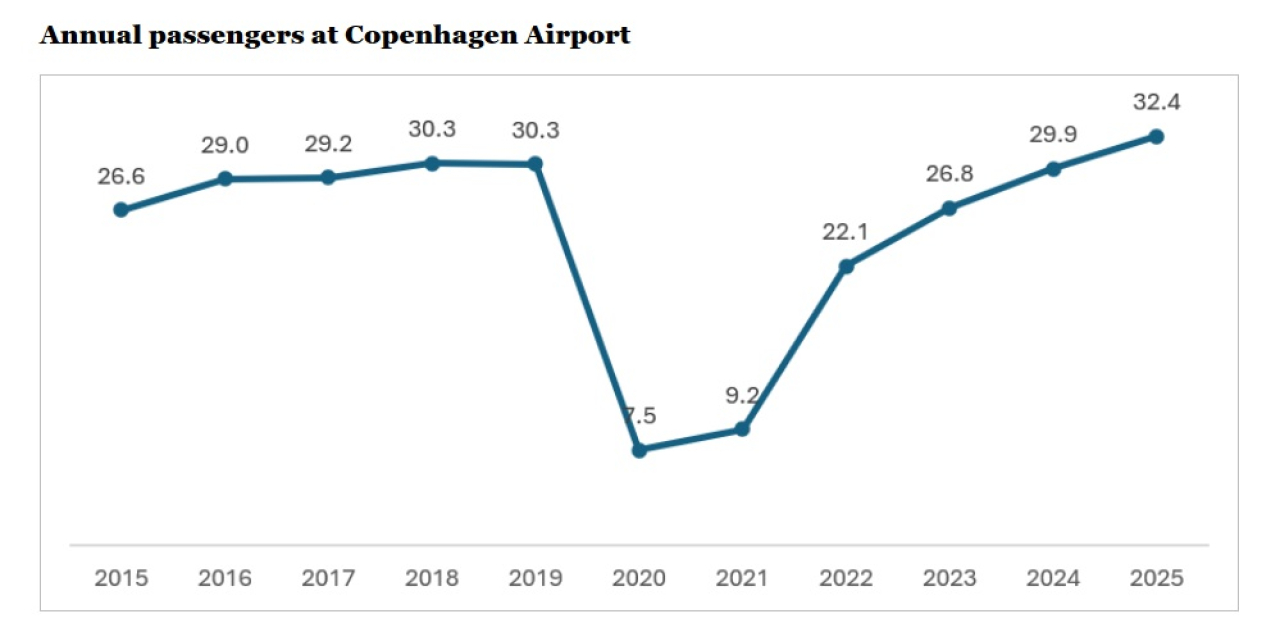
This follows an already strong recovery after the pandemic. Traffic grew from around 30.3 million passengers in 2019 to 32.4 million in 2025, 7.2% higher, while 2026 should comfortably surpass this. It is a very different story for other large hubs in Western Europe, many of which struggled to reach 2019 traffic levels last year.
© Dion Zumbrink
© Dion Zumbrink
CPH has not simply recovered lost traffic. Its airline and destination mix has changed considerably. This helps explain why Copenhagen is currently growing faster than many of Europe's traditional hubs.
The most important change is the development of SAS, Scandinavia’s hub carrier. The airline’s passenger numbers at CPH were approximately 21% higher in 2025 than in 2019, and its share of airport traffic reached 38%, compared with around one-third before the pandemic.
SAS Rebuilds CPH as its Main Hub
This follows a deliberate change in network strategy. Following its restructuring and entry into SkyTeam in September 2024, SAS announced that CPH would become its principal global hub, rather than continuing to operate a more evenly distributed multi-hub model across CPH, Stockholm Arlanda (ARN), and Oslo (OSL). The change is evident in the network: for summer 2025 SAS offered 108 routes from CPH, compared with 63 from ARN and 50 from OSL, and most of its 28 new summer routes were concentrated at CPH.
However, this was not simply capacity being removed from ARN and OSL. SAS increased total summer 2025 capacity by around 2.2 million seats to 23 million with the addition of five A320neos and five Embraer E195s, while four older A320s were phased out. This has significantly strengthened the connecting function of the airport. Transfer passengers increased by 27% to 7.2 million in 2025.
The growth isn’t only SAS-driven. Ryanair has expanded substantially since 2019, and its additional passenger volume compensates for the reduction by easyJet and Norwegian.
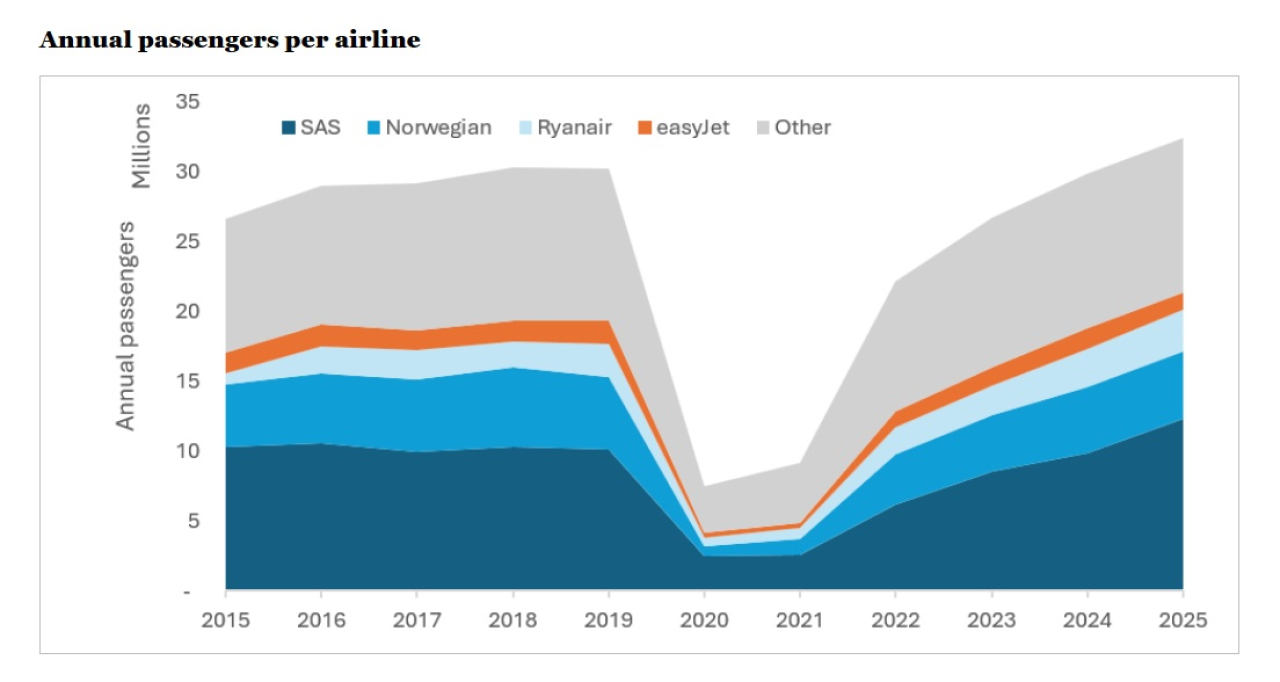
Ryanair's share of traffic has grown significantly.
© Dion Zumbrink
Big Growth Shifts to the U.S. and Italy
The destination statistics show another important change, with the United States becoming one of the strongest growth markets. SAS has concentrated more of its North American network at CPH, and during summer 2025, 10 U.S. destinations were served directly, including new routes to Seattle and Minneapolis. Traffic was up 33.4% in 2025 compared to 2019.
European leisure markets have also expanded strongly. Spain, Italy and France are all materially above their 2019 passenger levels. Airline expansion has played a role here. SAS added Madrid, Valencia, Seville, Bilbao, Milan Linate, and Lyon as part of its Copenhagen expansion. Ryanair has also added capacity to Italy.
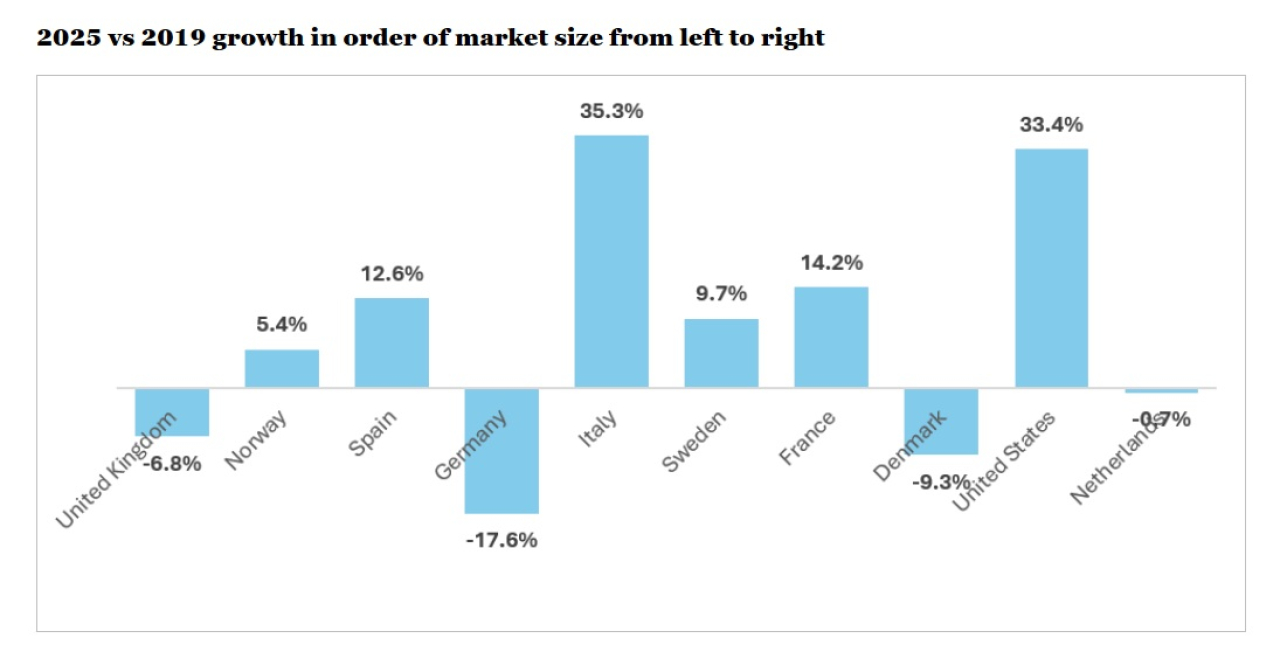
Destination in U.S. and Italy have been big winners, and Germany the big loser.
© Dion Zumbrink
At the same time, traffic to Sweden and Norway has strengthened. This reflects the increased feeder services to CPH as the main hub in the network. CPH itself reports that the increase in transfers is being driven largely by passengers from Sweden, Norway and Northern Europe connecting to long-haul services.
Not every market has recovered. Domestic Danish traffic and Germany remain below 2019 levels. Domestic point-to-point flying has weakened since before COVID19, particularly on smaller routes where surface transport is competitive, while reduced airline capacity slowed the recovery further.
The strengthening of CPH as an international hub is beginning to reverse this trend by creating new connecting demand from regional Denmark, with about 40% of domestic passengers now transferring at Copenhagen.
A Stronger Hub, Not Just a Recovered Airport
CPH’s outperformance is driven by a combination of factors. SAS has rebuilt the airport as its principal connecting hub, Ryanair and other airlines have added additional point-to-point capacity, Scandinavian feeder traffic has strengthened, and growth in leisure and long-haul markets has more than compensated for weaker domestic and German traffic.
The outlook remains positive, although growth should moderate. CPH currently expects around 34.5 million passengers in 2026. The key difference with several competing European hubs is that Copenhagen is not just recovering its pre-pandemic network. Its hub structure is expanding again, leading to a new source of growth well beyond its Danish home market.