
Login/Register
Opinion: Airports Investments Today Must Keep in Mind Tomorrow’s Passenger
Sev Fevzi
October 8, 2026
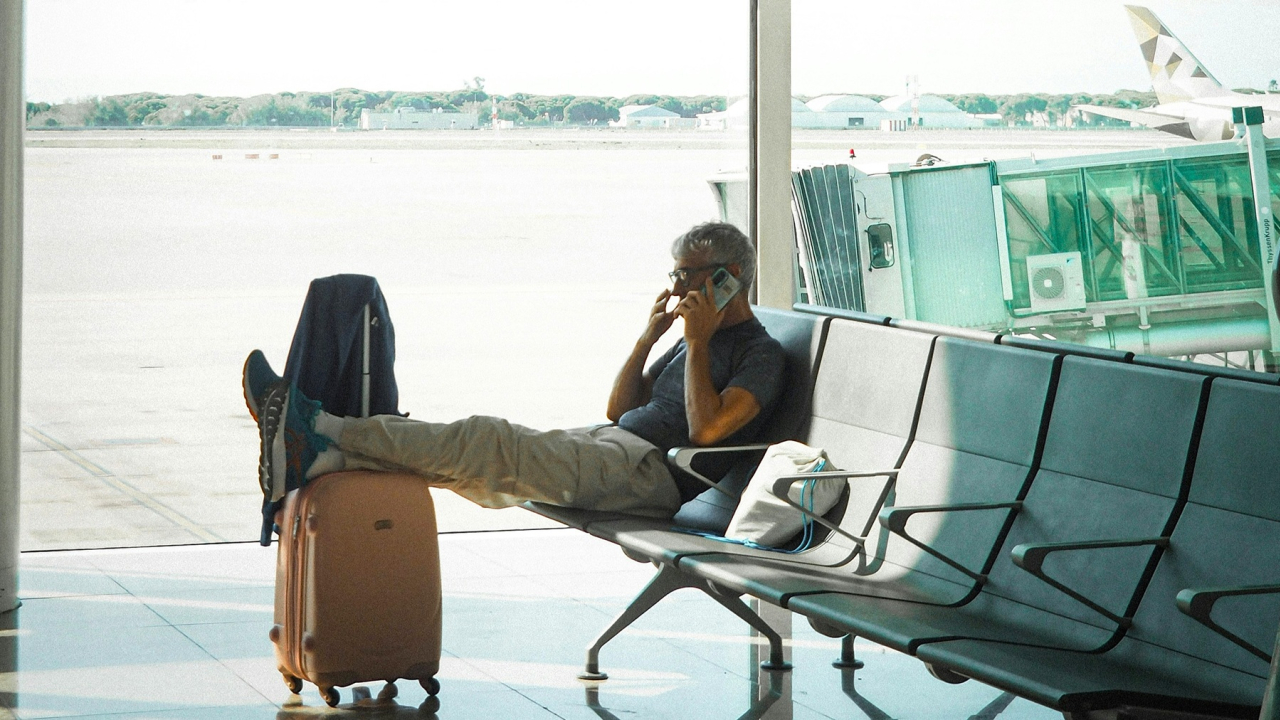
The future passenger and his/her demands could be very different from today.
© David Geneugelijk / Unsplash
Canada’s decision to seek private investment through long-term concessions at its four largest airports has generated considerable discussion around capital, ownership structures, governance, and returns. It also provides a timely opportunity to consider a broader question: What are we actually investing for?
In my previous article, ‘The Human Side of Airport Infrastructure Investment’, I looked at the people behind airport investment—those who ultimately bring infrastructure to life and shape how it is experienced. But there is another question within that same conversation: are we investing with enough understanding of the people who will use that infrastructure over its lifetime?
Airport infrastructure is built for the long term. Terminals, processing facilities, and major infrastructure investments planned today may still be serving passengers in 2040, 2050 and beyond. Passengers, however, are changing much faster. The traveler an airport will serve 20 years from now may have very different needs and expectations from today’s airport user.
Populations are aging. Demand for assistance is increasing. Awareness of non-visible disabilities continues to grow. Digital natives are an increasingly important passenger segment, while expectations around personalization, seamless processing, and real-time information continue to evolve.
At the same time, families, groups, and multi-generational travelers do not necessarily move through airports in the same way as the individual passenger around whom many processes have traditionally been designed. This creates a challenge for airport investors and planners: are we investing based on the passenger we serve today, or the passenger who will use the infrastructure throughout its lifetime?
Looking Beyond the Numbers
Airport investment has been driven by forecasts such as passenger volumes, aircraft movements, terminal capacity, peak-hour demand, and commercial potential. These remain fundamental. But these all reflect numbers; they do not necessarily tell us who those people will be, how they will travel, or what they will need from the infrastructure. The distinctions matter.
A terminal may technically have sufficient capacity while still creating friction for passengers navigating long walking distances. A highly digital journey may improve efficiency for some while creating new barriers for others. Automated processes can increase throughput, but their success ultimately depends on whether passengers understand, trust, and can use them.
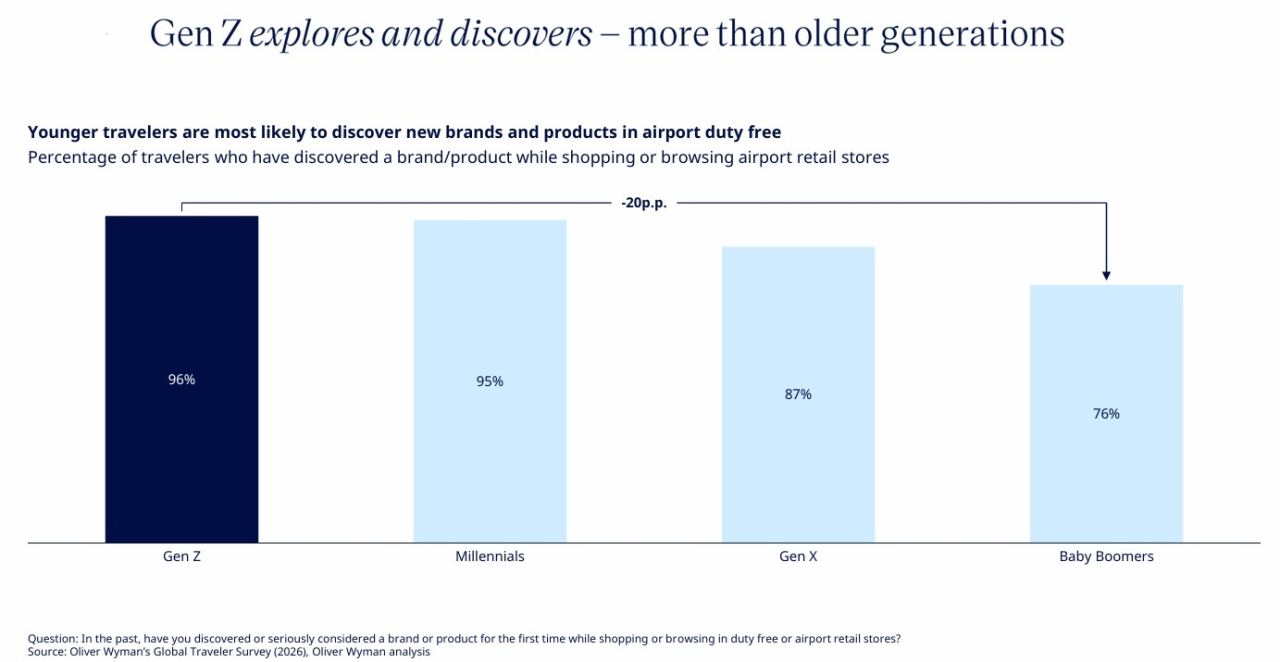
From a commercial perspective, Gen Z sees the airport in a very different way to Boomers, and investment has to account for this to be effective.
© Oliver Wyman
Similarly, an infrastructure decision that works for today’s demographic may require expensive adaptation later if planners didn't consider accessibility, changing mobility needs, or evolving passenger behaviors early enough.
Designing Flexibility into Investment
Nobody can predict exactly what the passenger of 2045 will expect. Nor should airports attempt to design around every possible future scenario. The opportunity is instead to build adaptability into investment decisions.
That means considering passenger personas and journey behaviors alongside demand forecasts. It means embedding accessibility and inclusive design early rather than retrofitting solutions. It means thinking about digital and physical journeys together, recognizing that passengers increasingly experience the airport through both. And, importantly, it means designing infrastructure that can evolve as passenger needs, technology, and operating models change.
Adaptability also extends to the people who will operate the airport. As automation and digital processing reshape the passenger journey, the role of employees will evolve. Fewer transactional touchpoints do not necessarily mean the need for fewer people; instead, human interaction may become more important at other points where judgment, reassurance, problem-solving, and assistance are needed most.
Infrastructure investment therefore needs to consider how tomorrow’s passenger will move through the airport, and how the workforce will support that journey. The question is not simply, “Does this investment solve today’s problem?” but also, “How easily can it adapt to the passengers, people, and operating models of tomorrow?”
Measuring the Return Differently
For investors, this does not mean abandoning traditional measures of performance but considering airport infrastructure through a broader lens. Passenger experience influences how people use airport spaces, interact with technology, seek assistance, dwell in commercial areas, and perceive the airport overall.
Infrastructure that is intuitive, accessible, and adaptable can support operational efficiency as well as a better passenger experience. That makes understanding the future passenger more than a customer-experience exercise. It becomes part of protecting the long-term value and relevance of the asset itself.
The current discussion around airport privatization provides an opportunity to think beyond how much capital airports require and where that capital will come from. We should be asking what that investment needs to deliver over its lifetime. The infrastructure we invest in today will last for decades. It needs to be ready for the passengers of tomorrow.