
Login/Register
UK Government Approves Heathrow’s Plan for Third Runway
Kevin Rozario
November 26, 2025
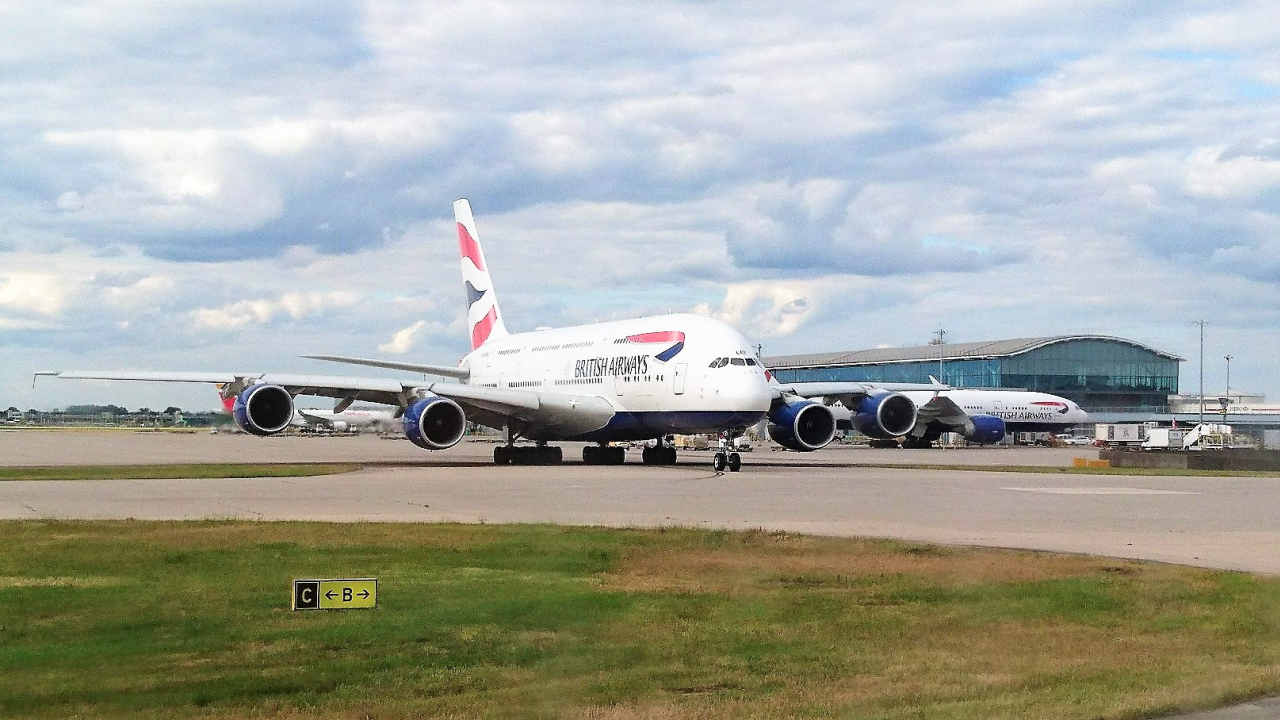
A BA A380 with T5 in the background.
© Kevin Rozario /
The British government, on Tuesday, announced that the third runway proposal from London Heathrow Airport (LHR)—one of two that were on the table—will be the basis for expansion at the UK’s only hub.
The 100% privately costed plan was up against another one from property and hotel group, Arora, called Heathrow West. According to the government, Heathrow’s proposal “offers the most deliverable option and provides the greatest likelihood of meeting the ambition for a decision on a development consent application within this parliament”.
National elections are due in 2029, so the current Labour administration will push for a planning decision by then. Meanwhile, preparations are afoot to redraw London airspace to enable flights to take off from the new full-length runway by 2035.
In a statement, the government added: “The scheme was chosen to drive a swift and robust policy review to shape plans for Heathrow expansion in line with the UK’s legal, environmental and climate obligations.” The airspace review will enable quicker, quieter, and greener flights, while the new runway will be a boost for connectivity, support national economic growth, and improve the passenger experience.
Despite being heavily constrained, LHR remains the world’s best-connected airport according to OAG data, and a third runway will further enhance the possibilities for route development.
A GBP49 billion (USD64.6 billion) budget has been allocated for the third runway, which will include several new infrastructure phases at Europe’s busiest airport. These will include new or expanded terminals, transport infrastructure for access, and other upgrades.
A Game-changing Development
The third runway will be truly transformative. It will allow Heathrow to grow from just under 500,000 air traffic movements today to just under 750,000, in turn enabling capacity to increase to 150 million passengers. This year, LHR expects to serve just over 84 million passengers from the current two-runway system.
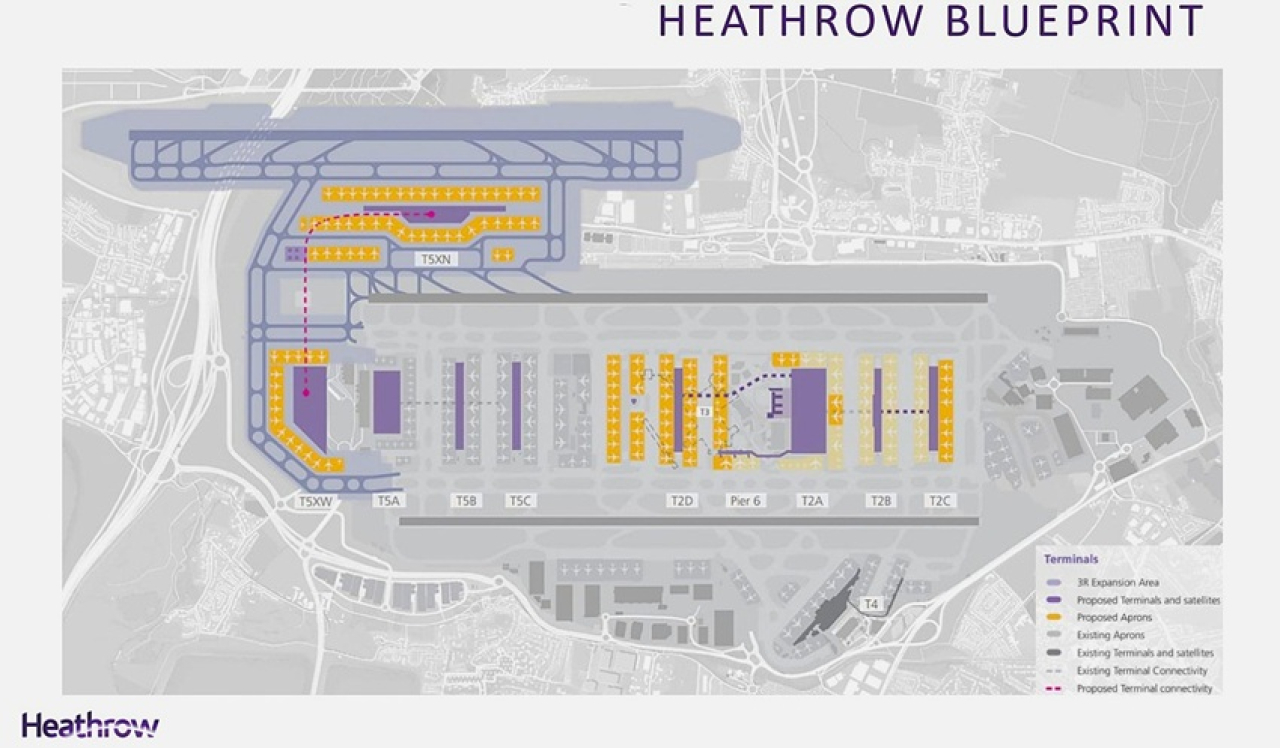
The main terminal expansions will be to the north and west of T5, and new satellites for T2.
© Heathrow Airport Limited
Based on LHR’s 100% privately financed masterplan, the following infrastructure will be put in place to support the extra capacity derived from a third runway:
- A new terminal complex west of Terminal 5 (T5XW) that will be bigger than the existing T5, currently used solely by British Airways
- A new satellite terminal north of Terminal 5 (T5XN) directly serving the third runway
- A major upgrade of Terminal 2 with two extra satellite piers
- The phased closure of Terminal 3
- Redevelopment of the Central Terminal Area
- An expanded public transport interchange.
In return for delivering a fully privately funded national asset, Heathrow will be looking for regulatory and planning concessions from the government. After all, it is estimated that this single piece of infrastructure development will add 0.43% to UK GDP. In particular, LHR will want to see some relief of business rates, some movement on tax-free shopping (which was removed in 2021), and a framework to support LHR’s long-term investment so that it can maintain an A- credit rating (most likely in the form of tax relief).