
Login/Register
India’s Latest 11 Airport Privatizations Are Set Within a More Ambitious Framework
Kevin Rozario
July 24, 2026
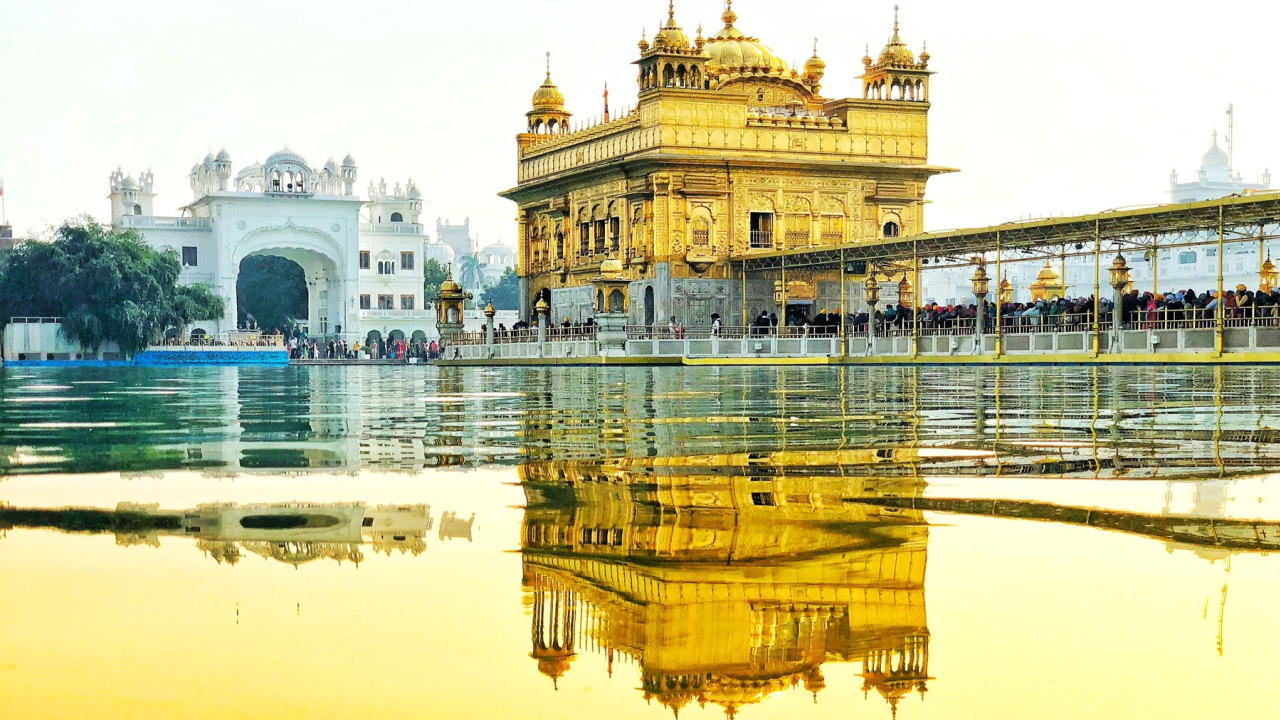
Amritsar's Golden Temple is a major visitor site in India, making ATQ a valuable air gateway.
© Ravi N. Jha / Unsplash
India’s latest airport public-private partnership (PPP) effort is underway. The government has confirmed plans that were first set out last year for bundled regional airport assets, marking the next potential subcontinent buying wave for global aviation infrastructure investors.
The 11 Airports Authority of India (AAI) brownfield airports are part of a larger 26-airport pool, and are available in five tranches as follows:
1. Amritsar (ATQ), Kangra/Dharamshala (DHM)
2. Gaya (GAY), Kushinagar (KBK), Varanasi (VNS)
3. Aurangabad (IXU), Raipur (RPR)
4. Bhubaneswar (BBI), Hubli (HBX)
5. Tirupati (TIR), Trichy (TRZ).
According to local media, India’s Ministry of Civil Aviation (MoCA) has submitted its plans to the Public Private Partnership Appraisal Committee (PPPAC) for approval so that tenders can be prepared. At the time of writing, tenders had yet to be issued as the committee has requested several clarifications, including eligibility criteria, capex requirements, and bundle caps.
This privatization round comes after a series of PPPs that kicked off in 2003 with the eventual sell-off of India’s biggest hubs, Delhi (DEL) and Mumbai (BOM) in 2006. The 2019 round of six airports was won by the Adani Group, making it India’s largest private airport operator.
Revenue for Government Coffers
The Modi government has been keen to showcase the aviation opportunities in the country, and airport PPPs have been a high-profile—though not the most lucrative—part of the National Monetisation Pipeline (NMP), which is tasked with extracting revenue from public infrastructure, often via leasing.
A big change is that the latest 11 airports are part of NMP 2.0, the 2025-2030 second extraction phase that aligns with the infrastructure development plans of the Viksit Bharat initiative for a developed India by 2047. NITI Aayog, India’s main government policy think tank, notes: “PPPs are an important mode of monetization under NMP 2.0 and are expected to play a significant role by improving public sector efficiency and service, reducing public debt through capital recycling, and attracting private sector investment.”
Below, airportIR looks at how the wider aviation PPP process is faring, the reasoning behind this latest set of batched assets, and the financial framework underpinning the process.
Investor Insights
Subscriber-only content. You must be signed in and have a subscription plan to view this information.
Not a member of airportIR?
Subscribers receive access to value-added content including the latest Deal Pipeline intel, in-depth feature articles and analysis, operator/investor profiles, industry insights, reports and much more.
What's Included
- In-depth deal pipeline content
- Feature articles and analysis
- Detailed operator/investor profiles
- Industry insights, reports and much more
Lorem ipsum dolor sit amet, consectetur adipiscing elit. Proin faucibus arcu et sem dapibus, faucibus viverra ex semper. Sed maximus urna quis lectus porta gravida. Sed enim sem, ullamcorper at tempor et, tincidunt eget purus. Etiam vitae iaculis dolor. Etiam commodo tempus turpis. Integer ac nunc ac leo facilisis tempus. Pellentesque quis sagittis diam. Fusce congue pulvinar interdum. Curabitur porta libero enim, ullamcorper condimentum diam accumsan quis. In tempor egestas risus, id congue nibh cursus in. Cras sollicitudin fermentum orci et eleifend.
Nam eget imperdiet risus, at luctus nulla. Nullam porttitor, est quis viverra fringilla, ipsum velit tincidunt massa, vel egestas lacus velit eget mauris. Proin finibus condimentum tellus, in commodo felis dapibus a. Curabitur luctus et sapien a dapibus. Mauris faucibus dapibus justo vitae varius. Proin quis mauris eros. Curabitur tincidunt feugiat dignissim.
Lorem ipsum dolor sit amet, consectetur adipiscing elit. Proin faucibus arcu et sem dapibus, faucibus viverra ex semper. Sed maximus urna quis lectus porta gravida. Sed enim sem, ullamcorper at tempor et, tincidunt eget purus. Etiam vitae iaculis dolor. Etiam commodo tempus turpis. Integer ac nunc ac leo facilisis tempus.