
Login/Register
India Moves Beyond Major Hubs—Just in Time For New Privatizations
Dion Zumbrink
November 22, 2026
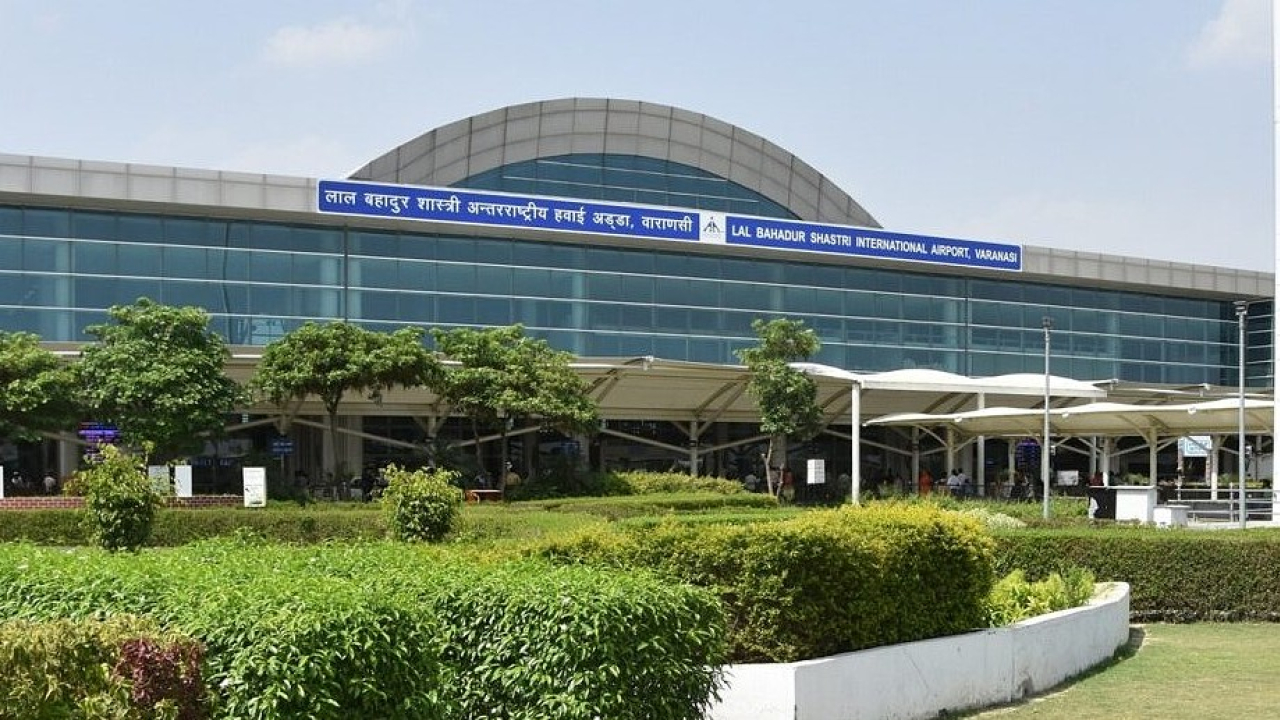
Lal Bahadur Shastri International Airport in Varanasi (VNS) is a key gateway that is set for privatization.
© AAI
India is preparing another round of airport privatizations. Under the National Monetisation Pipeline 2.0, 26 Airports Authority of India (AAI) airports have been identified for private participation between FY2026 and FY2030. The first 11 include Amritsar, Varanasi (pictured above), Bhubaneswar, Raipur and Tiruchirappalli airports, handling between 2-5 million passengers annually, alongside smaller airports.
These are very different gateways compared to the Delhi or Mumbai concessions in earlier privatisation rounds. Investment cases today depend much more on the continued development of regional air travel.
There are clear signals that overall Indian domestic traffic stalled during 2025 and 2026. However, when digging deeper, smaller airports appear to still be growing. Meanwhile, international traffic remains concentrated at the largest gateways. The key question is whether the recent shift in traffic towards smaller airports strengthens the investment case for privatisation, or whether their growth remains too dependent on airline capacity.
Domestic Growth Moves Beyond the Largest Airports
The strongest trend is visible in domestic traffic. In the first eight months of 2019, airports outside the top eight handled approximately 63 million domestic passengers. By 2026, this had increased to around 82 million, growth of approximately 30%.
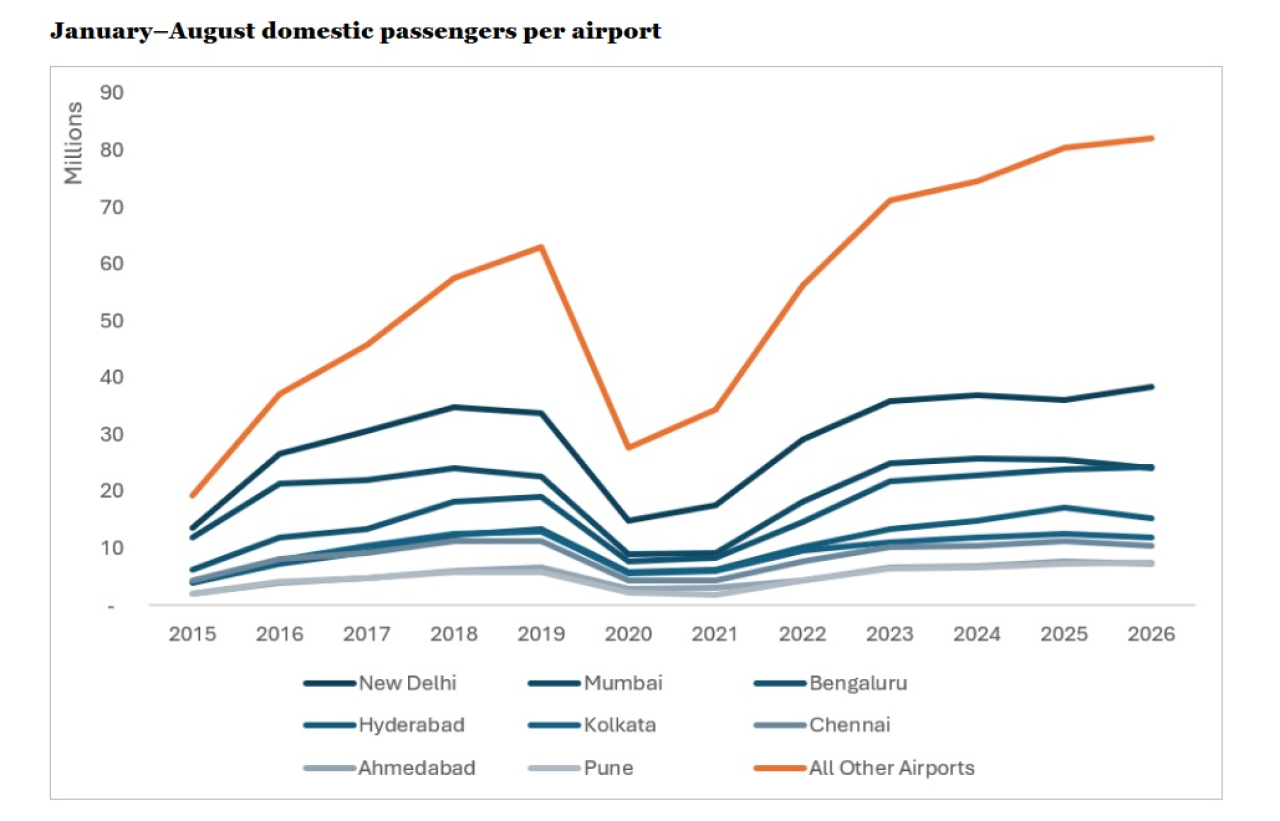
Indian domestic traffic trends since 2015 (January-August).
© Dion Zumbrink
This compares with substantially more moderate growth at several large airports. Delhi is around 13% above 2019, and Mumbai only around 7%, while Kolkata and Chennai remain below their pre-pandemic levels.
This year has marked a significant slowdown in the wider Indian market. By August, domestic airlines had carried 0.2% fewer passengers than in 2025. However, smaller airports were up 2.2% against a decline of 1.6% at the top eight airports.
Bengaluru and Hyderabad have grown more strongly, but overall, an increasing proportion of India’s domestic market is being generated on direct routes between the smaller airports. And connections to larger airports seem more mature.
In the domestic market, IndiGo remains dominant, but its growth has slowed, reflecting weaker demand, geopolitical disruption, and lower load factors. Air India Group declined in 2026, although its market share improved in August. At the same time, the group has started to strengthen regional feeder initiatives with a new product, Easy Connect, which allows passengers to complete international formalities at selected regional airports before transferring through a major hub. If expanded, this could support connectivity at secondary airports without requiring them to sustain direct long-haul services.
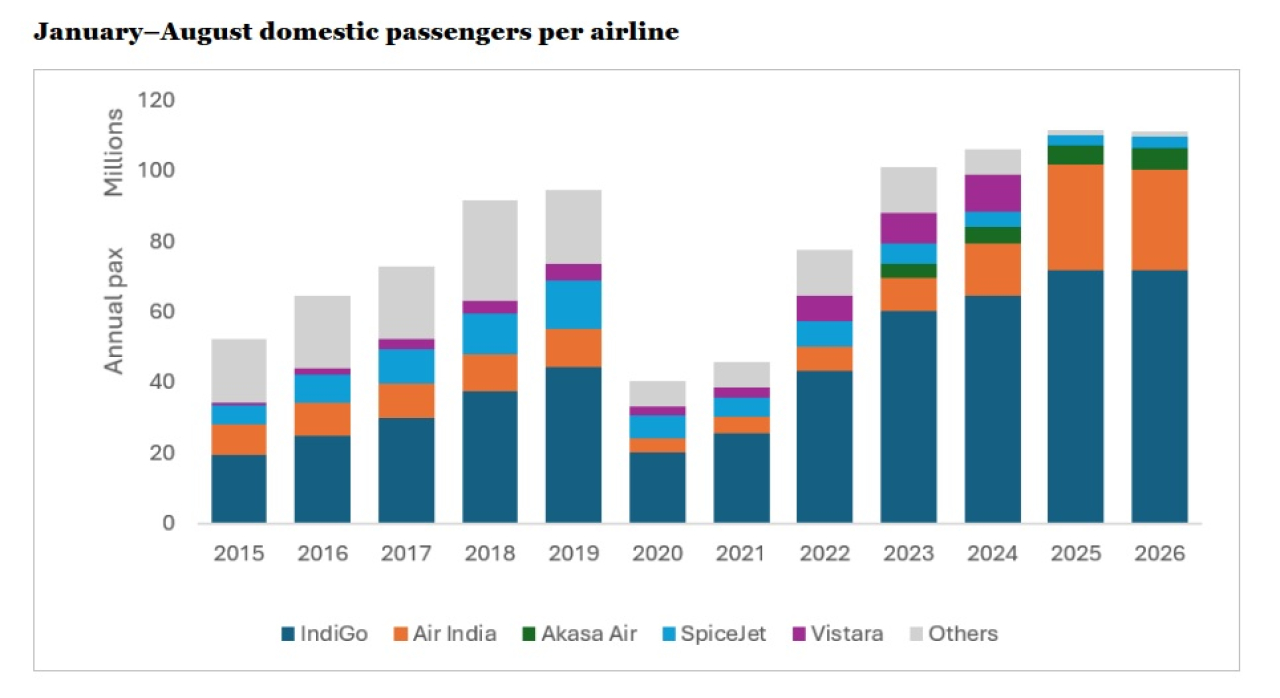
Airline market shares in India since 2015 (January-August).
© Dion Zumbrink
International Traffic Remains Concentrated
International traffic presents a different picture. Delhi and Mumbai have grown strongly since 2019. While traffic has been moderating in 2026, it is holding up. However, the aggregated international traffic at other airports declined sharply during 2026. It is therefore important to note that India's traffic decentralisation remains principally within the domestic market.
Part of the international decline reflects exceptional circumstances. The Middle East conflict and airspace restrictions have disrupted one of India's most important international markets. Many secondary international airports depend heavily on the visiting friends and family (VFR) segment, and labour traffic to the Gulf. The impact was amplified by the airline mix. Air India Express and IndiGo have significant Gulf-focused operations from regional airports, while the largest airports have more diversified networks and a larger foreign-airline presence.
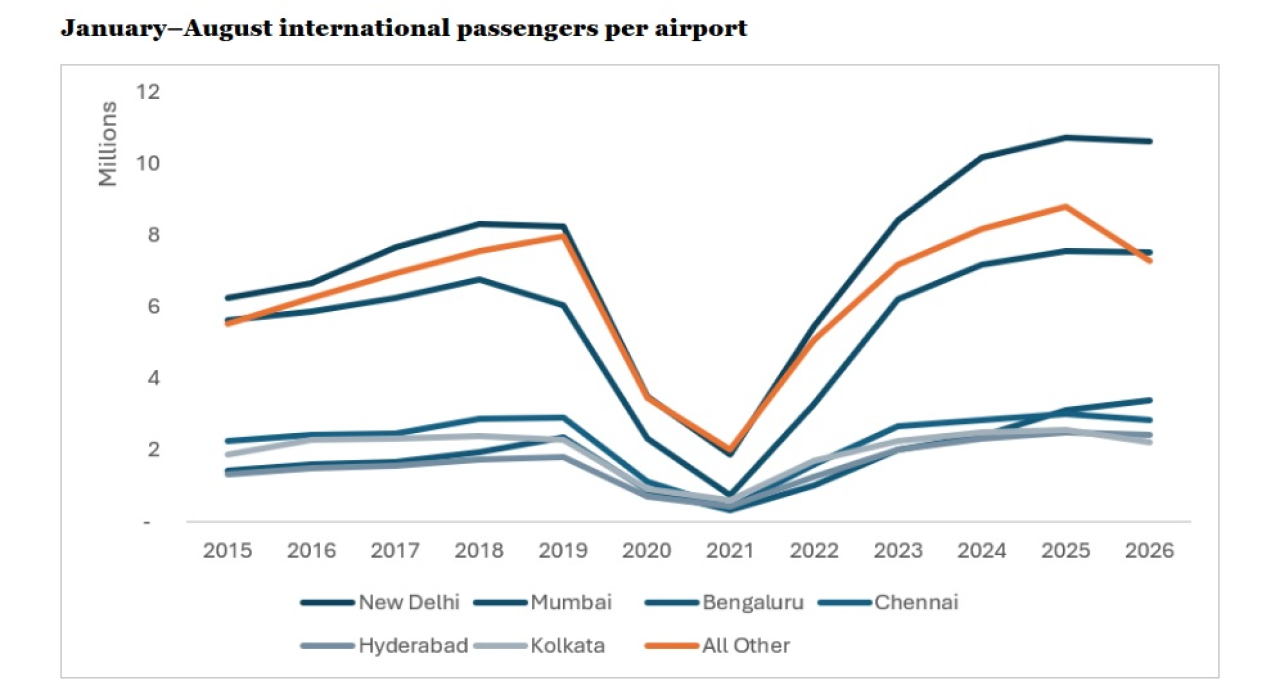
International traffic trends since 2015 at six major airports, versus the rest (January to August).
© Dion Zumbrink
Regional Growth is Attractive, but Airline Dependence is Rising
Overall domestic traffic has weakened, international disruption has hit regional gateways disproportionately, and several large airports have stagnated. Yet aggregated domestic traffic outside the top eight continues to rise. This strengthens the case that the decentralisation of domestic aviation is a resilient trend.
At the same time, that growth is increasingly dependent on a very small number of airlines. IndiGo and Air India Group together carried more than 90% of domestic passengers in August 2026. Their reduction in international operations had a significant impact at smaller airports.
For the regional gateways entering a privatisation process, this creates both opportunity and risk. Incoming aircraft, new point-to-point routes and initiatives such as Air India’s hub model could generate substantial additional traffic. But unlike Delhi or Mumbai, smaller airports have limited ability to influence whether airlines actually deploy capacity there.