
Login/Register
Greece’s Privatization Success Story So Far—And What’s Next
Kevin Rozario
April 24, 2025
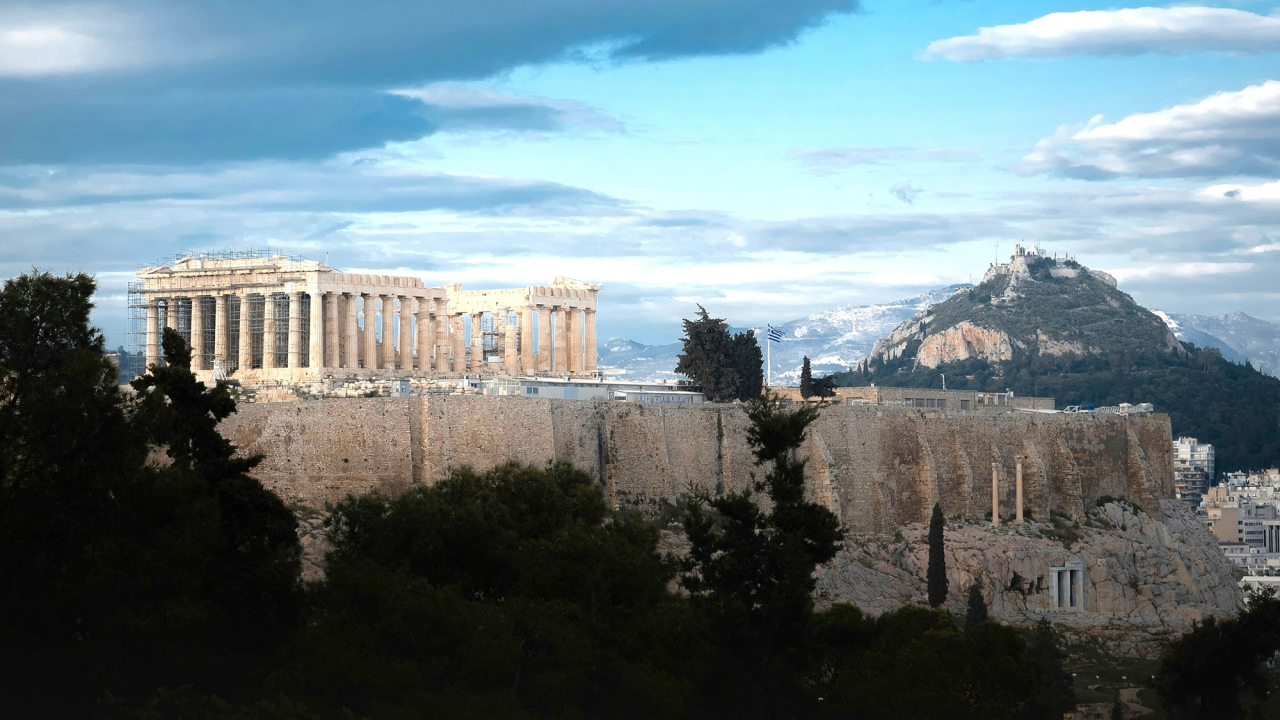
The Acropolis, Athens.
© John Koliogiannis / Unsplash
Greece has been a hotbed of airport privatization for over two decades, with multiple sell-offs having taken place. It started with Athens International Airport (ATH) from the time of its construction as a greenfield BOOT (build-own-operate-transfer) project, and opened in 2001. That process peaked with an IPO, and the government selling a 30% stake early last year.
In the intervening period, the Greek state also awarded 14 regional airports to Fraport Greece in 2017—a joint venture between Germany’s Fraport and Greece’s Copelouzos Group—via a 40-year concession with a EUR1.53 billion (USD1.8 billion*) upfront fee, plus annual payments of 28.6% of EBITDA, according to the Hellenic Republic Asset Development Fund (HRADF).
The airports, though regional, are some of the principal international tourist gateways to Greece. They include: Thessaloniki, Mykonos, Santorini, Rhodes, Kos, Corfu, Zakynthos, Skiathos, Samos, Chania, Kavala, Kefalonia, Lesvos, and Aktio.
The government also finally shifted the Kalamata Airport concession. AirportIR reported on the launch of expressions of interest (EOI) for this asset back in 2021, yet the final award was only made at the end of last year. Fraport and its Greek partners—Delta Airport Investments (Copelouzos Group) and Pileas Holdings (Constantakopoulos Group)—secured the deal with a bid totaling EUR45.2 million (USD53.1 million).
Forced Infrastructure Sales
State sell-offs of infrastructure were among the bailout terms imposed on Greece following the Global Financial Crisis in 2008 and its long-term repercussions. As the worst-hit market in the European Union, Greece was subjected to strict austerity measures from the European Commission, European Central Bank, and International Monetary Fund (IMF), whose bailout totaled EUR260 billion (USD306 billion).
While the situation at the time was dire, the Greek economy is less vulnerable today as conditions have improved significantly. However, the Bank of Greece put public debt at over 160% of GDP at the start of 2025, which is still high, but it has been falling. Meanwhile, other economic indicators, including record tourism receipts, are improving and, in some cases, ahead of many EU markets.
Below, we examine how Greek airport privatizations have fared, with a particular emphasis on ATH, which is now fully privatized and in the process of new expansion. We will also look at prospects for the 22 regional airports that still have to come to market.
Investor Insights
Subscriber-only content. You must be signed in and have a subscription plan to view this information.
Not a member of airportIR?
Subscribers receive access to value-added content including the latest Deal Pipeline intel, in-depth feature articles and analysis, operator/investor profiles, industry insights, reports and much more.
What's Included
- In-depth deal pipeline content
- Feature articles and analysis
- Detailed operator/investor profiles
- Industry insights, reports and much more
Lorem ipsum dolor sit amet, consectetur adipiscing elit. Proin faucibus arcu et sem dapibus, faucibus viverra ex semper. Sed maximus urna quis lectus porta gravida. Sed enim sem, ullamcorper at tempor et, tincidunt eget purus. Etiam vitae iaculis dolor. Etiam commodo tempus turpis. Integer ac nunc ac leo facilisis tempus. Pellentesque quis sagittis diam. Fusce congue pulvinar interdum. Curabitur porta libero enim, ullamcorper condimentum diam accumsan quis. In tempor egestas risus, id congue nibh cursus in. Cras sollicitudin fermentum orci et eleifend.
Nam eget imperdiet risus, at luctus nulla. Nullam porttitor, est quis viverra fringilla, ipsum velit tincidunt massa, vel egestas lacus velit eget mauris. Proin finibus condimentum tellus, in commodo felis dapibus a. Curabitur luctus et sapien a dapibus. Mauris faucibus dapibus justo vitae varius. Proin quis mauris eros. Curabitur tincidunt feugiat dignissim.
Lorem ipsum dolor sit amet, consectetur adipiscing elit. Proin faucibus arcu et sem dapibus, faucibus viverra ex semper. Sed maximus urna quis lectus porta gravida. Sed enim sem, ullamcorper at tempor et, tincidunt eget purus. Etiam vitae iaculis dolor. Etiam commodo tempus turpis. Integer ac nunc ac leo facilisis tempus.