
Login/Register
IATA Data: A Flat July, but an Improvement on the Past Three Months
Kevin Rozario
September 2, 2026
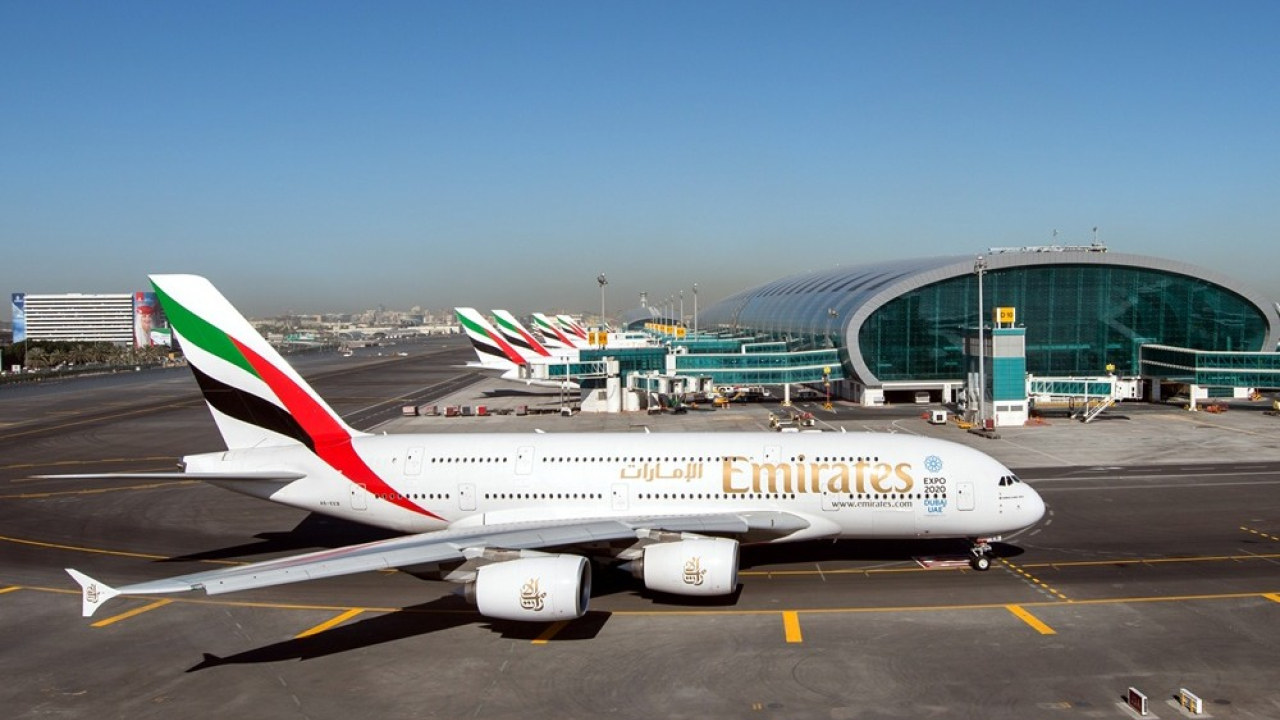
The Middle East is still heavily impacting global traffic growth.
© Emirates
Global passenger traffic barely returned to growth in July following three consecutive months of contraction. This was mainly due to the continuing hostilities triggered by the Iran war, which started on February 28. However, the resumption of U.S. bombing in early July after a lull does not augur well.
According to IATA data, industry-wide revenue passenger kilometers (RPK) increased by +0.2% year‑on‑year (YOY) in July as the drop in passengers carried by Middle Eastern airlines eased further. Asia-Pacific carriers returned to growth after two months of decline, while North American airlines continued to record weaker traffic volumes.
Global domestic traffic resumed growth, up +0.6% YOY “primarily driven by the rebound in China's domestic market,” says IATA. The decrease in international traffic continued to moderate, down just -0.1% YOY in July. The airline association expects scheduled seat capacity will increase by +1.9% YOY in August, and by +2.9% YOY in September.
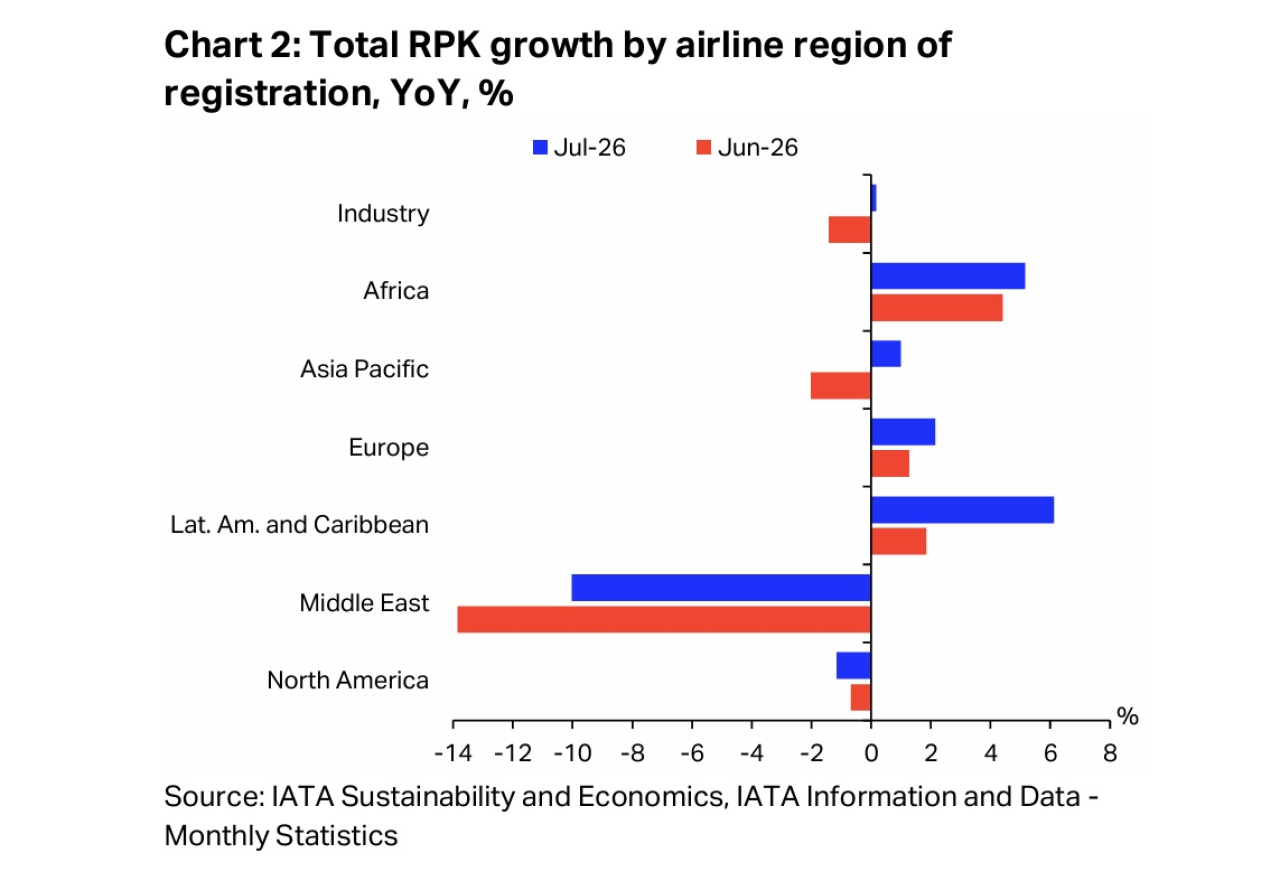
Based on regional RPK, the traffic decline from Middle Eastern airlines was the greatest at -10%, but the contraction moderated from -13.8% YOY in June as geopolitical tensions had eased during that period. Excluding Middle Eastern carriers, global passenger traffic grew by +1.2% YOY, indicating the scale of their impact.
Latin America, Caribbean, and Africa Lead
Airlines in Latin America and the Caribbean saw the strongest growth of any region in July, with demand rising by +6.1% YOY. IATA says: “The performance was driven by international traffic, which increased by +7.1%, as well as strong growth in key domestic markets such as Brazil.” African carriers were also strong, showing +5.2% growth in demand.
Asia Pacific airlines returned to growth (+1.0% YOY) after two months of contraction, supported by stronger demand in two key domestic markets: China, the region’s largest domestic market; and Japan. In China, domestic RPK increased by +5.3% YoY, after declining in May and June. IATA says: “Reductions in domestic fuel surcharges from early July could have supported traffic demand.”
Meanwhile, a return to growth in Japan was fueled by a +0.9% increase in domestic traffic after a drop in June. On the other hand, India’s domestic market was very weak, with traffic dropping by -6.3% YOY, on top of a slight fall recorded in June.
The biggest winners in July were Latin Amercian & Caribbean, and Africa.
© IATA
North American Demand Continues to Fall
North America was the only market to see a worse scenario in July than in June as carriers reported a -1.2% YOY decline in traffic. This marked a third consecutive month of contraction. IATA says this reflects “softer international traffic, alongside continued weakness in the U.S. domestic market.”
European carriers improved on their June performance, with July showing a +2.1% YOY increase, supported by a +3.1% rise in international demand. Passenger traffic between Europe and Asia grew +12.1%, representing the strongest expansion of any major international corridor.
Marie Owens Thomsen, IATA’s Senior Vice President of Sustainability and Chief Economist, comments: “The peak northern summer travel season is a mostly positive story for air travel. Overall growth of +0.2% in July was achieved despite year-on-year collective declines by carriers in North America and the Middle East.
“Notably, traffic through the Gulf hubs continues its recovery trajectory. Although high fuel costs, economic uncertainty and geopolitical tensions continue, carriers are expressing confidence in demand for the last part of the year with an almost 3% expansion of seat capacity in September.”
Those tensions have escalated in recent weeks. The latest plan from the Trump administration is to impose further economic sanctions designed to isolate Iran. These moves merely underscore the geopolitical volatility that still exists in the Middle East, and which has ripple effects given the region’s importance for global connecting traffic.