
Login/Register
GAD Americas 2026 in Review
Kevin Rozario
June 3, 2026
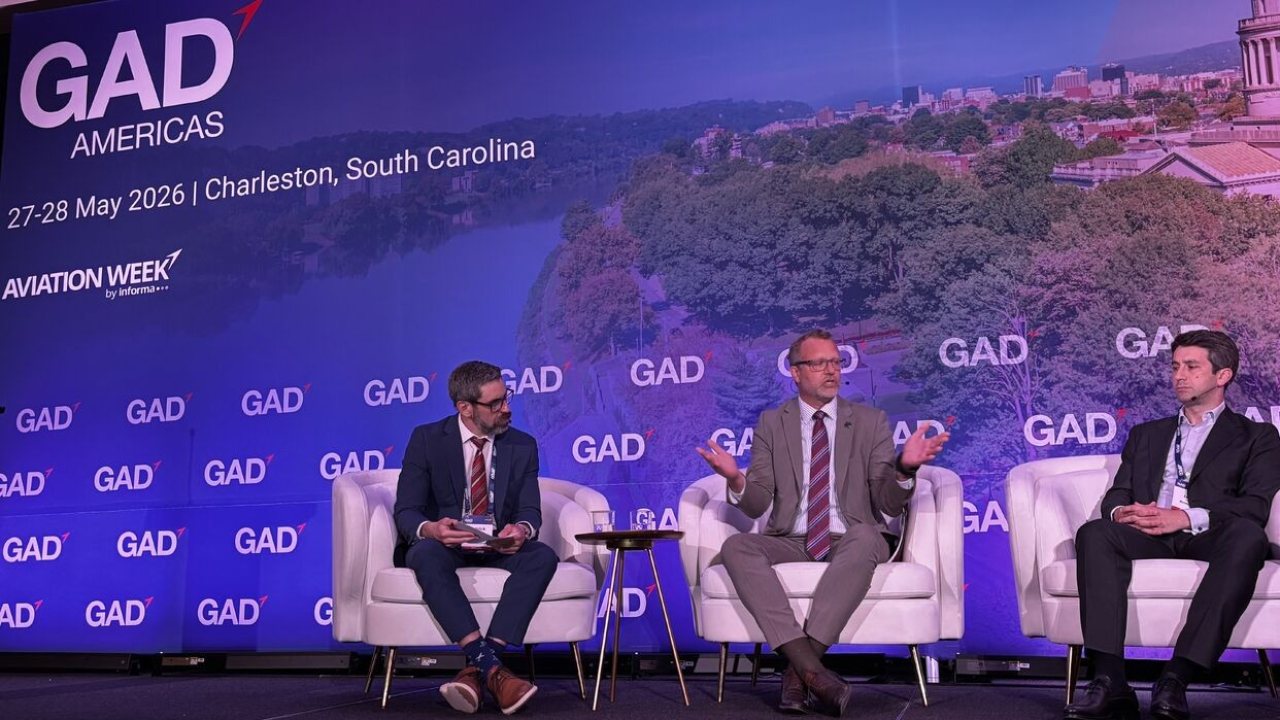
The 'Size Matters… Or Does It?' panel was focused on making PPPs work beyond mega hubs.
© GAD Americas
More than 200 delegates attended GAD Americas 2026—a leading conference for airport strategy and finance—held this year in Charleston, South Carolina (May 26-28). The event offered insights on multiple pressing topics, ranging from the U.S. airport investment outlook as identified by Goldman Sachs, and the value of collaborative capital to ensure resilient airport investment, to issues such as making public-private partnerships (PPPs) work beyond the mega hubs, and why CEOs have begun to prioritize culture over capacity.
The event brought together airport operators, investors, financiers, regulators, government representatives, and industry experts to discuss the investment realities ahead and where the next wave of growth and transformation in airports might lie.
In particular, the forces reshaping airport strategy across the U.S., Canada, Latin America, and the Caribbean were explored. This included assessing shifting federal priorities and private capital appetite to the market, as well as the leadership and workforce models required out to 2035. Technology also came under scrutiny given how airports have accelerated AI adoption, modernized ATC, and reworked security through hybrid models that deliver speed, safety, and scalability.
Feedback about the intensive two-day conference—co-located in Charleston with the CAPA - Centre for Aviation Airline Leader Summit Americas—was positive. Patrick Lucas, Principal and Founder of Airport Economics Consulting Inc. and a former Vice President and Chief Economist at ACI World, described “insightful and thought-provoking discussions.”
Curtis Grad, Partner, President and CEO of Modalis Infrastructure Partners (which owns airportIR), added: “I can attest that it was a great GAD Americas... kudos to the organizer for delivering another flawless event. And many thanks to our Charleston hosts for their warm southern hospitality.”
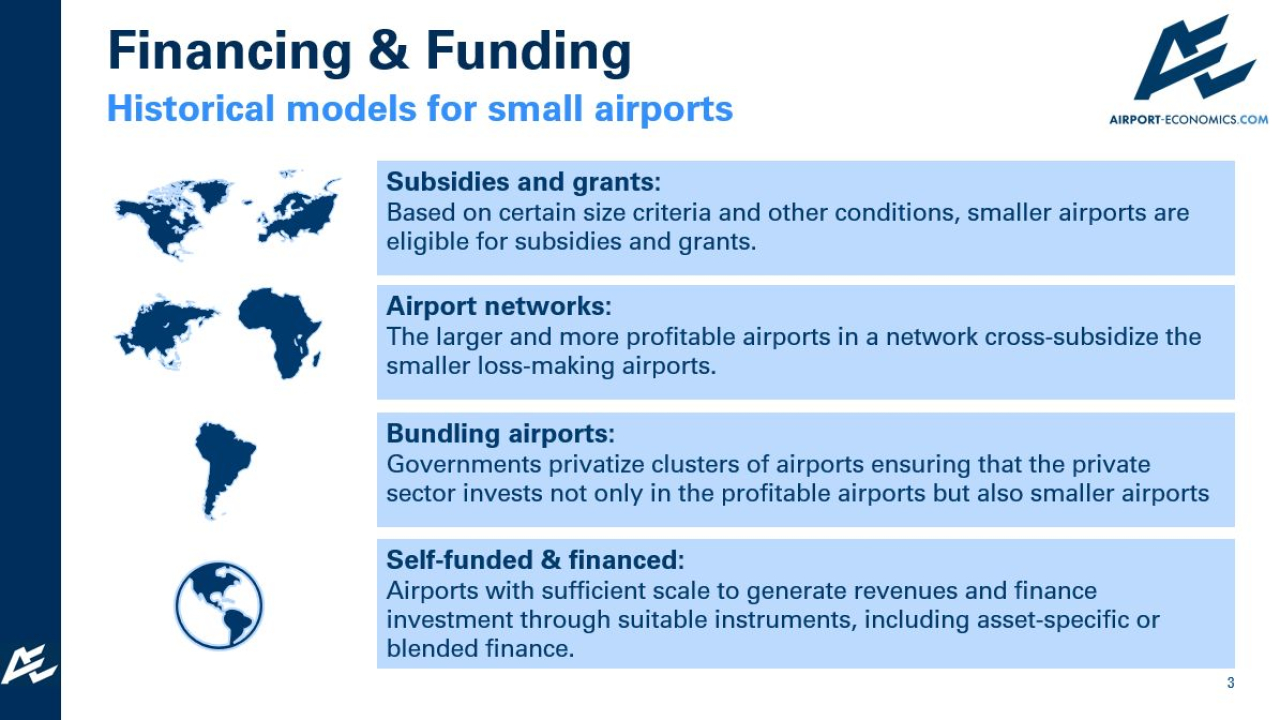
There are multiple solutions for funding for smaller airports.
© Airport Economics Consulting
Financing Smaller Airports
Lucas, who ran a session about airport finance and funding for smaller airports in an era of elevated government debt, commented: “I was honored to moderate such an outstanding line-up of panellists.” One of his key takeaways was that there is no one-size-fits-all solution.
He said: “Success depends on selecting the right delivery model, allocating risks appropriately, maintaining stable and predictable regulatory frameworks, and removing barriers to traffic growth. Together, these factors help create an environment conducive to investment, enabling airport development that enhances regional connectivity and generates wider socio-economic benefits.” While many airports serve fewer than five million passengers annually, their role in regional connectivity and economic growth is significant.
There were also spotlight panels on Canada, Latin America, and the Caribbean, as well as a session dedicated to ways of unlocking non-aviation revenue through strategic asset development.
Airport Modernization Under Scrutiny
In a panel titled ‘Capital for the Terminal of the Future: Financing Airport Modernization,’ moderated by MIP’s Grad, industry leaders Luke Bugeja, CEO of Ferrovial Airports; Barclays Bank’s Director of Infrastructure & Project Finance, Francisco Brugueras; Nicholas Vallorano, Partner at Mayer Brown; and Roel Huinink, CEO of JFKIAT, delved into the complexities of financing airport modernization. The panelists explored the role of PPPs in airport development, with Brugueras highlighting financial strategies to ensure “bankability” during crises.
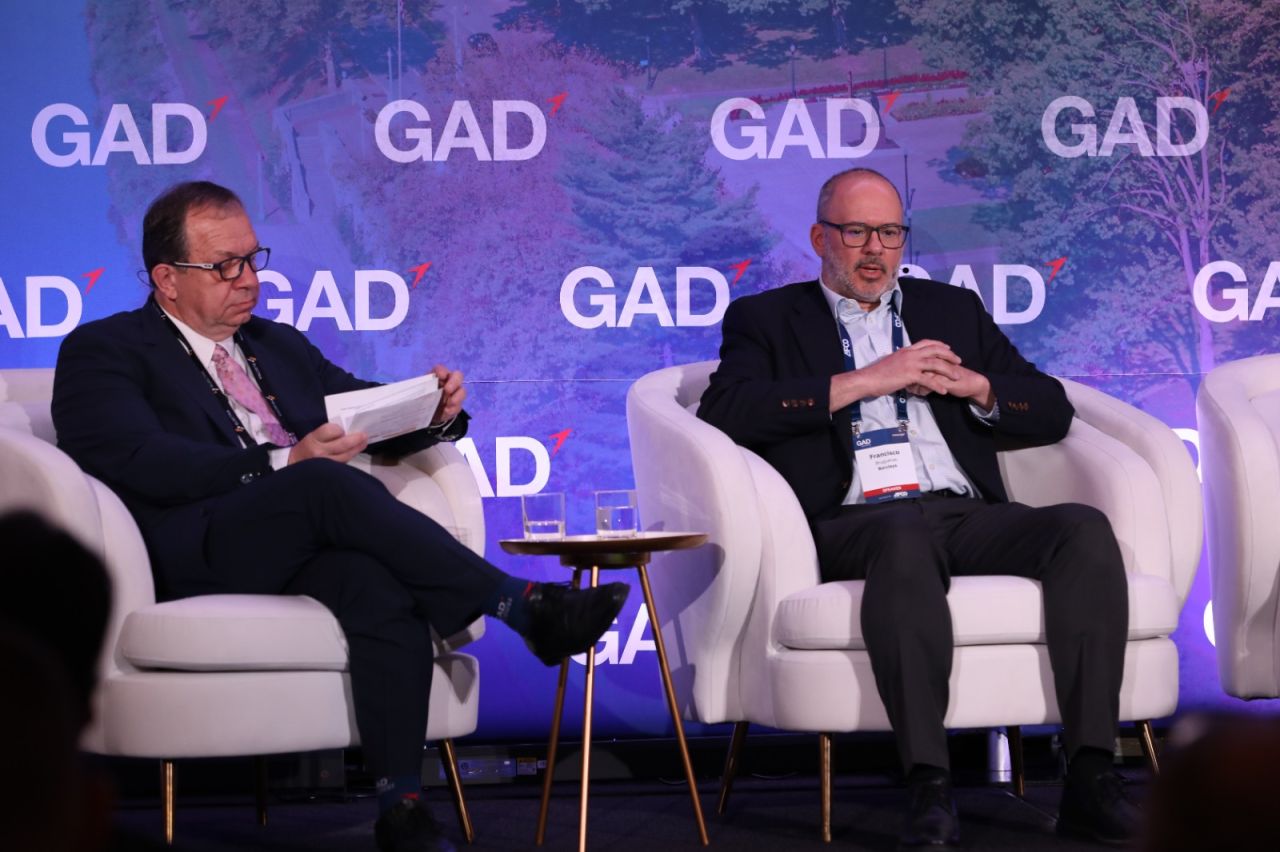
Panel session: Capital for the Terminal of the Future: Financing Airport Modernization.
© GAD Americas
Vallorano stressed the importance of government clarity in project scoping to avoid delays, citing examples such as St. Louis and Chicago Midway. Bugeja shared global insights, noting the unique challenges of U.S. airport governance and federal subsidies, which can complicate privatization processes. The session also celebrated JFK Terminal 4's 25th anniversary, reflecting a long-term privatization success story and growth from four million passengers in 2001 to over 27 million annually.
A highlight for some delegates would have been the first urban flight of an Electra EL9 hybrid-electric ultra-short aircraft at Charleston’s Columbus Street Terminal. The aircraft can take off and land in 150 feet, unlocking the prospect of non-airport direct aviation as a new model for travel, “opening the door to transformative options for regional mobility,” according to Electra’s CEO Marc Allen. (Click the link here to watch the video below.)

The Electra EL2 demonstration. (Video link is above the image.)
The closing panel at GAD Americas 2026 was a fireside chat with Aecon, which executes complex infrastructure projects. President of Aecon Concessions, Steve Nackan, spoke to Grad from Modalis Infrastructure Partners in detail about Aecon’s strategies across both infrastructure development and PPPs.
Central to the discussion was Aecon's collaboration with the Canadian Commercial Corporation (CCC), which offers a AAA-rated contract wrap that guarantees performance and shields projects from political risks. The mechanism has been instrumental at Quito and Bermuda airports. Grad described it as “an interesting and engaging conversation on the future of airport capital attraction.” He added: “It was a fitting wrap to GAD Americas 2026. Steve shared some very useful insights on alternative project delivery models, including the novel CCC G2G mechanism.”